Skip to content
Skip to content

Outdoor Wi-Fi

Outdoor and garden Wi-Fi installation

Weatherproof outdoor access points that bring reliable coverage into beer gardens, terraces, yards, car parks and gardens — installed and aimed after a survey, not guessed at.

Who outdoor wi-fi is for

Pubs and restaurants with beer gardens or terraces, yards and car parks where staff use handhelds or card terminals, and homes that want usable Wi-Fi in the garden or at a garden office. If you need to link a separate building rather than cover open ground, that is a point-to-point job instead.

Problems this solves

The commercial cost of getting this wrong.

These are the day-to-day symptoms JKL Electrix hears about most from businesses across Northern Ireland — buying more equipment rarely fixes them on its own.

  • Beer gardens and terraces with no usable signal
  • Yards and car parks that lose card terminal connection
  • Gardens and patios where indoor Wi-Fi barely reaches
  • Cameras and access control dropping in outdoor areas
  • Staff handhelds and scanners disconnecting outdoors
  • Existing indoor APs bleeding a weak signal into the wrong places

Survey and diagnosis

How the property is assessed first.

  1. 1Measure what the indoor access points actually deliver outdoors before adding anything.
  2. 2Walk the outdoor area at the distances customers or staff actually use it.
  3. 3Identify mounting positions with a sensible cable route and no obstruction.
  4. 4Check for interference from neighbouring premises, which is common on high streets.
  5. 5Confirm whether coverage is the answer, or whether a point-to-point link to a separate building is.

What's included

Practical, right-sized outdoor wi-fi.

  • Weatherproof, purpose-built outdoor access points
  • Correctly routed and terminated external cabling
  • PoE power so no outdoor sockets are needed
  • Separate SSIDs for staff, guests and operational devices
  • Coverage validated with real signal and speed testing

Testing, labelling and handover

  • Outdoor runs tested and terminated to the same standard as internal cabling.
  • External cable routes kept discreet and clipped properly.
  • Coverage re-measured outdoors after installation.
  • SSID and configuration notes handed over in writing.

Service area: Beer gardens, yards and gardens across County Down — Downpatrick, Newcastle, Castlewellan, Crossgar — and throughout Northern Ireland.

Related project

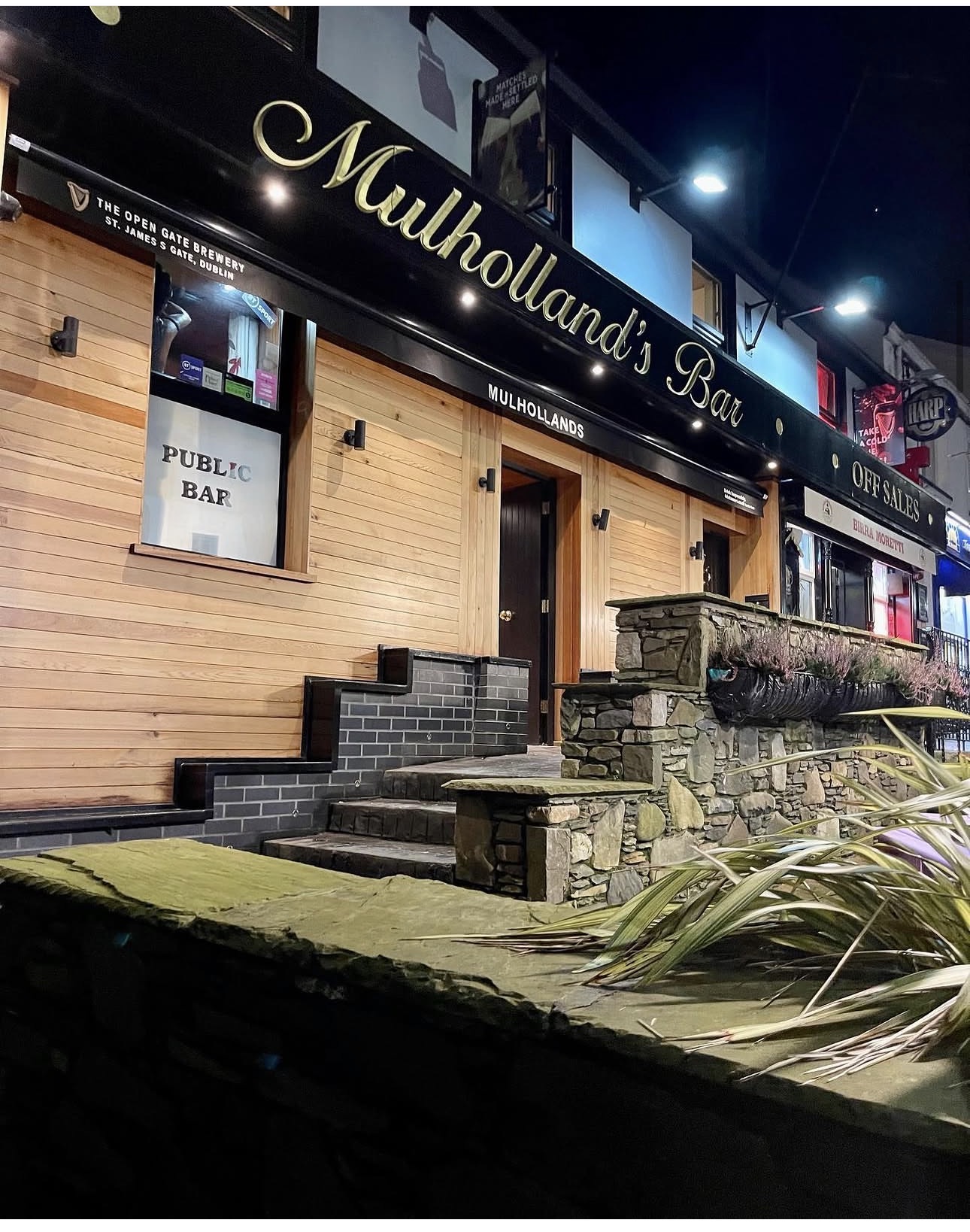
Exterior of Mulholland's Bar and Off Sales, Castlewellan, at night

Hospitality · Castlewellan, Co. Down

Mulholland's Bar & Off Sales, Castlewellan — 30 Mbps to 300 Mbps

A full network upgrade across a two-storey venue covering a public bar, off sales and back-of-house. The ISP had left the site on a flat default network, capping throughput at around 30 Mbps.

Read the Castlewellan case study

Outdoor Wi-Fi — common questions

What is the difference between outdoor Wi-Fi and a point-to-point link?
Outdoor Wi-Fi covers open ground so phones, terminals and handhelds work outside. A point-to-point link is a dedicated radio pair that carries the connection from one building to another. Separate buildings need a link — see the rural and outbuilding page.
Will an indoor access point near a window do the job?
Rarely. Indoor units are not built for weather and their signal falls away quickly outdoors. A purpose-made outdoor access point aimed at the area is more reliable and usually needs fewer units.
Can guests use it without reaching our tills?
Yes. Outdoor guest coverage sits on its own SSID and VLAN, isolated from payment, CCTV and back-of-house systems.
Do you need a power socket outside?
No. Outdoor access points are powered over the network cable using PoE, so there is no outdoor mains work involved.
Will it work in Northern Irish weather?
The units used are rated for outdoor installation and mounted with weatherproof glands and proper cable dressing.
Related pages

Not sure what your business needs?

Start with a Business Network Assessment — a paid, on-site review that gives you clear findings and a fixed-price quotation.

The full £199 fee is credited against qualifying installation work of £1,500 or more.